


 Menu
MenuGraphic Design Journal

A Kombucha Brand That Almost Was
Not every project makes it to market.
That’s something you learn quickly in the world of brand development. Ideas get momentum, concepts take shape, systems come together, and sometimes, for reasons outside the creative process, they stop short of becoming real.
But that doesn’t make the work any less valuable.
In fact, some of the most enjoyable, exploratory, and creatively fulfilling projects are the ones that never launch. They allow for freedom. They invite risk. They push boundaries without the weight of final production constraints.
This is one of those projects.
This was a fully realized brand concept for a kombucha beverage rooted in a unique cultural intersection, blending Turkish and Japanese influences into a cohesive identity system. It included not just one brand, but two: a premium flagship product and a more accessible, youthful sub-brand.
The product never came to fruition. But the work still stands as a strong example of strategic brand thinking, visual storytelling, and system-driven design.
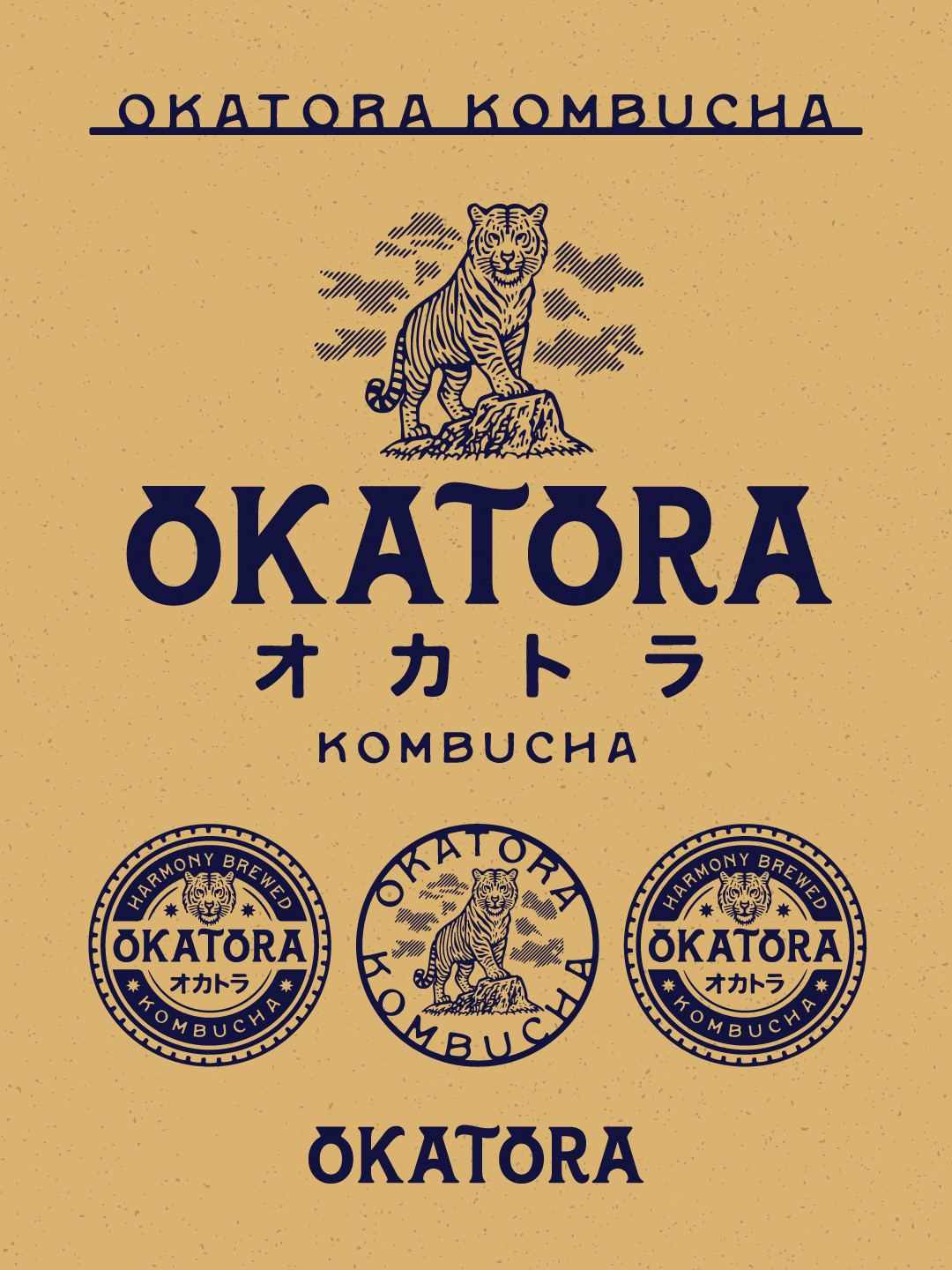
The Concept: A Cross-Cultural Kombucha Brand
From the beginning, Okatora was built around a compelling narrative: a kombucha brand inspired by multiple cultural origins.
- Japan
- Turkey
- United States
The name translates loosely to “Hill Tiger,” a concept that immediately evokes strength, nature, and mystique. It’s a name that feels rooted in tradition but adaptable to a modern wellness product.
Kombucha itself already sits at the intersection of health and ritual. It’s natural, functional, and slightly unconventional. That made it the perfect canvas for a brand that could feel both refined and a little wild.
The goal was to build something that felt:
- Premium but not sterile
- Natural but not overly “hippie”
- Cultural without being cliché
- Sophisticated while still approachable
That balance drove every design decision.
The Premium Flagship Brand
Okatora was positioned as the flagship product. A premium kombucha designed for a more refined audience.
Think glass bottles. Refrigerated. Clean ingredients. Elevated presentation.
Product Positioning
- Glass bottle (320ml and 1L formats)
- Refrigerated product
- Limited flavor variations (3–4 SKUs)
- Higher price point
Brand Tone
- Sophisticated
- Grounded
- Intentional
- Calm but confident
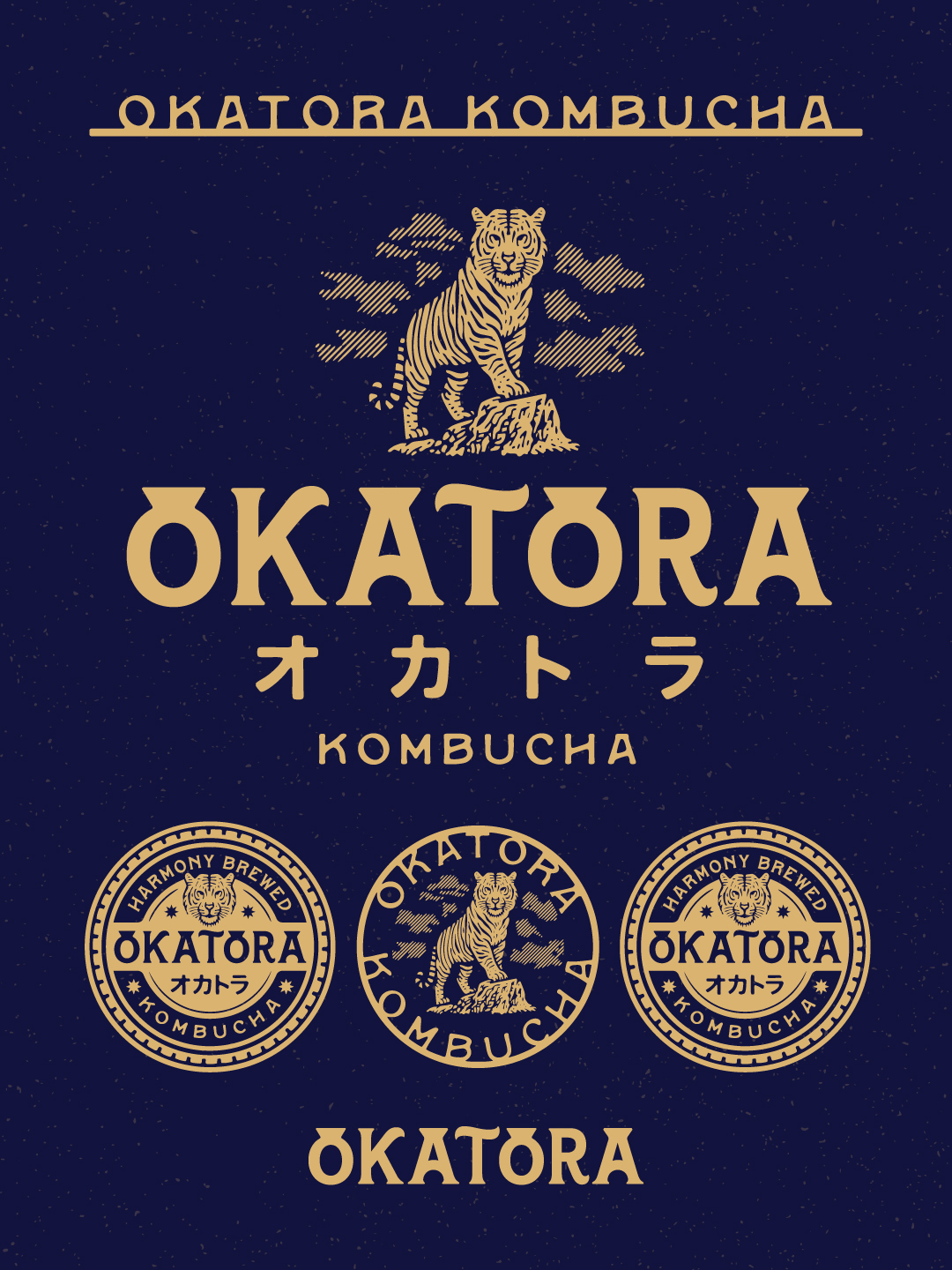
The visual identity leaned heavily into a vintage, illustrative style consistent with the 63 Visual aesthetic. Bold, single-color linework that translates cleanly across packaging, print, and merchandise.
At the center of the identity is the tiger.
Not an aggressive, roaring tiger, but a poised, grounded one. Standing on a rock. Calm, observant, confident. It reflects the idea of controlled strength and natural balance. Perfectly aligned with the kombucha category.
Visual System Highlights
- Engraving-style tiger illustration
- Serif-driven typography with strong character
- Subtle Japanese influence through katakana lettering
- Badge-style secondary marks for flexibility
- Limited, refined color palette (navy and gold, or inverted variants)
The system was designed to scale, from bottle labels to merchandise to retail displays, without losing its integrity.
The Younger, More Accessible Sub-Brand
Alongside Okatora, a second brand emerged: OkAt.
Where Okatora is refined and premium, OkAt is loose, energetic, and more accessible.
Product Positioning
- Aluminum cans (320ml)
- Shelf-stable (no refrigeration required)
- More approachable price point
- Same flavor philosophy, broader appeal
Brand Tone
- Youthful
- Playful
- Slightly irreverent
- More “hippie,” in the best sense
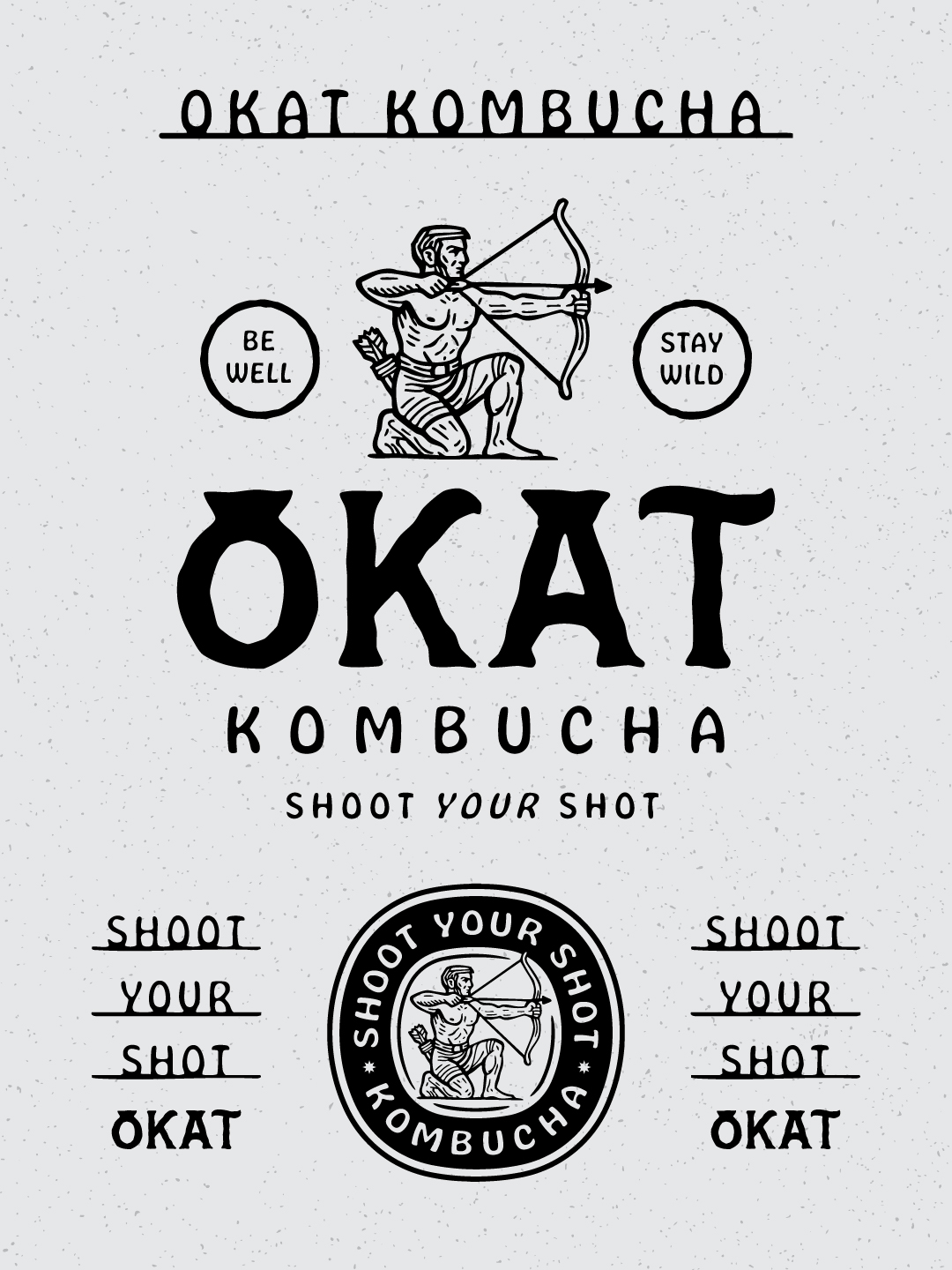
The name OkAt comes from the Turkish phrase meaning “shoot arrow,” which led directly to the central visual motif: the archer.
Visual System Highlights
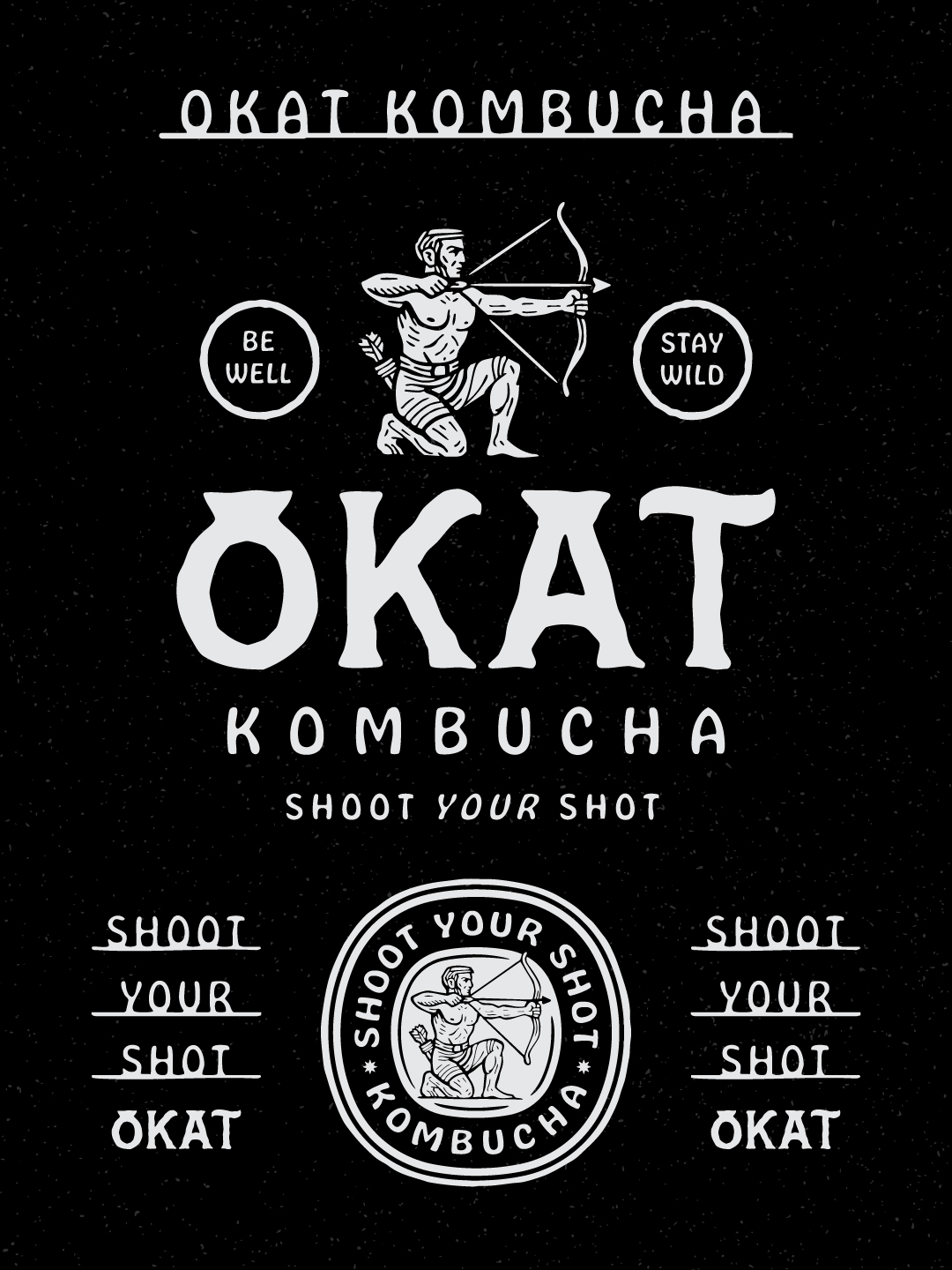
- Hand-drawn, imperfect typography
- Bold black-and-white execution
- Vintage illustration of a kneeling archer
- Supporting phrases like “Shoot Your Shot,” “Be Well,” and “Stay Wild”
- Badge-style marks for cans and merch
Compared to Okatora, the OkAt system intentionally loosens up. The lines are less rigid. The typography feels more spontaneous. The tone is more conversational.
But importantly, it still connects back to the parent brand.
The two systems feel related, but not identical.
That’s the key to a strong brand architecture.
Building a Cohesive Brand System
One of the most rewarding aspects of this project was developing a system that could support two distinct products without fragmenting the overall identity.
Too often, sub-brands either feel disconnected or overly constrained by the parent brand.
The goal here was to find the middle ground.
Shared DNA
- Hand-crafted, illustration-driven approach
- Vintage-inspired visual language
- Strong iconography (tiger vs. archer)
- Emphasis on wellness, nature, and vitality
Strategic Separation
- Okatora = premium, structured, refined
- OkAt = casual, expressive, youthful
This allowed each product to speak clearly to its audience while still feeling like part of the same world.
From a design standpoint, it’s a great exercise in restraint and flexibility at the same time.
Why Some Projects Don’t Launch
Here’s the reality: even strong concepts don’t always make it to market.
There are countless factors that influence whether a product launches:
- Manufacturing challenges
- Distribution logistics
- Financial considerations
- Timing and market conditions
- Internal business decisions
In this case, the project simply never moved forward.
And that’s okay.
Because the value of a project like this isn’t just in the final product—it’s in the process.
The Value of Work That Never Ships
Some of the most important creative growth happens in projects that never see the light of day.
Why?
- Explore ideas without restriction
- Refine your design instincts
- Build systems instead of just assets
- Experiment with tone, voice, and storytelling
- Push your style further
Okatora was one of those projects.
It reinforced the importance of building brands as systems—not just logos. It highlighted how cultural references can be woven together in a way that feels authentic rather than forced. And it provided an opportunity to create two distinct identities that still feel connected.
That’s the kind of work that carries forward into every future project.
Lessons from the Okatora Project
1. Strong Concepts Matter
The “Hill Tiger” and “Shoot Arrow” ideas weren’t just visual—they were conceptual anchors that guided the entire identity.
2. Brand Architecture Is Everything
Designing two brands simultaneously forces clarity. You have to define what belongs to each—and what connects them.
3. Simplicity Wins
Limiting color, focusing on strong illustration, and using intentional typography creates a system that’s both flexible and timeless.
4. Not Every Project Needs to Launch to Be Successful
Success in design isn’t always tied to market presence. Sometimes it’s about the quality of the thinking and execution.
Final Thoughts
Okatora Kombucha never made it to store shelves. There are no bottles, no cans, no retail displays. But the work is still meaningful. It represents a moment of creative exploration. A fully realized idea. A brand system that solved real problems and told a compelling story. And that’s what good design does, regardless of whether it ever becomes a product you can hold in your hand.
For us at 63 Visual, projects like this are a reminder that the process itself is worth it. Because every concept, every sketch, every system you build becomes part of a larger body of work—one that continues to evolve, refine, and inform everything that comes next.
If you’re building a brand, whether it’s launching tomorrow or still just an idea, we’d love to help bring it to life.


Dark Water Supplements Brand Development and Package Design
Consumers are presented with thousands of products making similar promises, often displayed through packaging filled with aggressive typography, exaggerated graphics and an overwhelming amount of information. For a new supplement company, creating an effective product is only part of the…
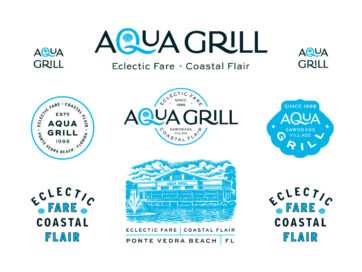
Aqua Grill Brand Exploration and Restaurant Merchandise Design
Located in Sawgrass Village in Ponte Vedra Beach, the restaurant has built a loyal following by offering an experience that feels polished without being overly formal. It is equally suited for a special evening out, a business dinner or a…
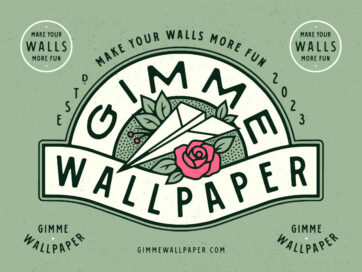
How a Thoughtful Brand Identity Helped Gimme Wallpaper Showcase Its True Personality
It’s reflected in the way customers talk about the company, the quality of the work, and the experience they receive from the people behind the brand. Unfortunately, that personality doesn’t always come across in the visual identity. That’s where Gimme…
GET IN TOUCH
GET IN TOUCH

Let’s Work Together
63 Visual Design Company
602 Shetter Avenue
Jacksonville Beach, Florida 32250
833.630.6363
info@63visual.com
